
How to Choose Healthy Training Treats for Your Dog
Training works best when the reward is something your dog really wants. But training sessions mean lots of rewards, and that adds up fast. Here's how to pick treats that keep your dog motivated without overdoing it.
What makes a good training treat
- Small. A training reward only needs to be a quick taste. Tiny pieces let you reward often and keep your dog's attention on you, not on chewing.
- Tasty. If your dog isn't excited about it, it won't work as a reward. Real-food flavors like peanut butter and sweet potato tend to be big hits.
- Simple ingredients. A short ingredient list makes it easier to avoid things your dog doesn't need, like artificial flavors and preservatives.
- Easy to carry. Crunchy, dry treats are less messy in a pocket or treat pouch than soft or greasy ones.
Keep an eye on the total
Veterinary nutritionists recommend keeping treats to no more than 10% of your dog's daily calories. On days with a lot of training, use smaller pieces, or set aside some of your dog's regular food to use as rewards for easy behaviors and save the treats for the hard stuff.
Training tips that make treats go further
- Reward right away. Give the treat within a second or two of the behavior so your dog connects the two.
- Keep sessions short. A few minutes at a time keeps your dog focused and keeps treat counts down.
- Use a "jackpot" for big wins. Save a few extra pieces for a breakthrough moment.
- Mix in praise and play. Not every reward needs to be food.
Our pick for training
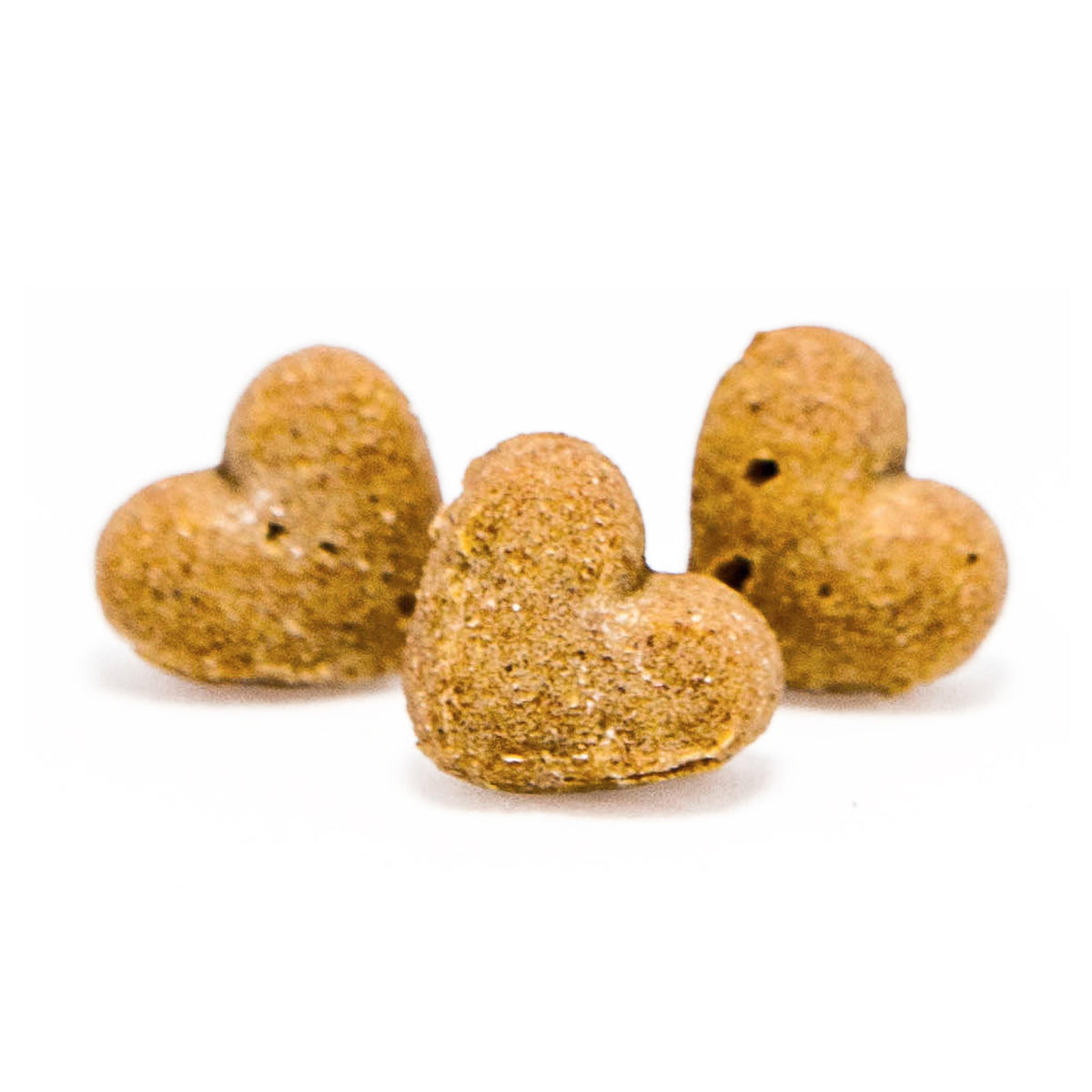
Our Sweet Potato Pie treats are small and heart-shaped, with about 115 treats in an 8 oz bag, so they're made for frequent rewards. They're made with organic sweet potato, organic rye and oat flours, non-GMO cold-pressed canola oil and a pinch of ginger, and nothing else.
Want to see which flavor your pup loves most? The Variety Pack has one bag of each recipe.